All 34 World Fighters Teams: 22 Nations, 6 Clubs, 5 High Schools and Real Japan 7
Every team in Captain Tsubasa 2: World Fighters: the 22 national teams with captains and story roles, plus the clubs, high schools and Real Japan 7.
Official sources
GamePrimer EditorialUpdated Verified
Bandai Namco’s team pages list 34 teams: 22 national youth sides, six clubs, five Japanese high schools and the Real Japan 7. Eleven of the nations were not in Rise of New Champions — Thailand, Uzbekistan, Saudi Arabia, China, Cameroon, Mexico, Sweden, Indonesia, Spain, South Korea and Canada — and the story runs through four of them in the Asian qualifiers before Brazil, Argentina, Mexico, Uruguay, Cameroon, Sweden and the Netherlands on the world stage.
The 22 national teams
Every team below links to its players on the roster page. “Players listed” counts the named characters on Bandai Namco’s own page for the team — not the eleven who walk out onto the pitch, which always includes unnamed squad players. “Story mode” is where Bandai Namco has placed the team on Tsubasa’s route; the teams without an entry have not been placed by an official source.
| Team | Captain | Players listed | Story mode | Series |
|---|---|---|---|---|
| Japan | Tsubasa Ozora | 31 | Your team | Returning from Rise of New Champions |
| Uzbekistan | Zangiev | 1 | Asian qualifying | Not in Rise of New Champions |
| Thailand | Singprasert Bunnaak | 5 | Asian qualifying | Not in Rise of New Champions |
| Saudi Arabia | Mark Owairan | 3 | Asian qualifying | Not in Rise of New Champions |
| China | — | 5 | Asian qualifying | Not in Rise of New Champions |
| Cameroon | Raymond Chandler | 2 | World Youth stage | Not in Rise of New Champions |
| Uruguay | Ramon Victorino | 3 | World Youth stage | Returning from Rise of New Champions |
| Mexico | Ricardo Espadas | 7 | World Youth stage | Not in Rise of New Champions |
| Sweden | Stefan Levin | 4 | World Youth stage | Not in Rise of New Champions |
| Argentina | Juan Diaz | 4 | World Youth stage | Returning from Rise of New Champions |
| The Netherlands | Brian Kluivoort | 7 | World Youth stage | Returning from Rise of New Champions |
| Brazil | Alberto | 8 | World Youth stage | Returning from Rise of New Champions |
| Indonesia | Eko Jawato | 2 | — | Not in Rise of New Champions |
| Spain | Emilio Romero | 2 | — | Not in Rise of New Champions |
| Senegal | Ismail Senghor | 3 | — | Returning from Rise of New Champions |
| England | Robson | 2 | — | Returning from Rise of New Champions |
| South Korea | Lee Yong-un | 3 | — | Not in Rise of New Champions |
| Canada | Liam Wincott | 4 | — | Not in Rise of New Champions |
| USA | Ryan Ortiz | 4 | — | Returning from Rise of New Champions |
| France | Elle Sid Pierre | 6 | — | Returning from Rise of New Champions |
| Italy | Zino Hernandez | 5 | — | Returning from Rise of New Champions |
| Germany | Karl Heinz Schneider | 7 | — | Returning from Rise of New Champions |
Eleven nations return from Rise of New Champions; the other eleven are the sequel’s expansion. That expansion is where the box’s “previously unseen teams from the manga and original teams” lives: Thailand, Uzbekistan, Saudi Arabia and China are Tsubasa’s Asian qualifying opponents, and the other seven are Cameroon, Mexico, Sweden, Indonesia, Spain, South Korea and Canada.
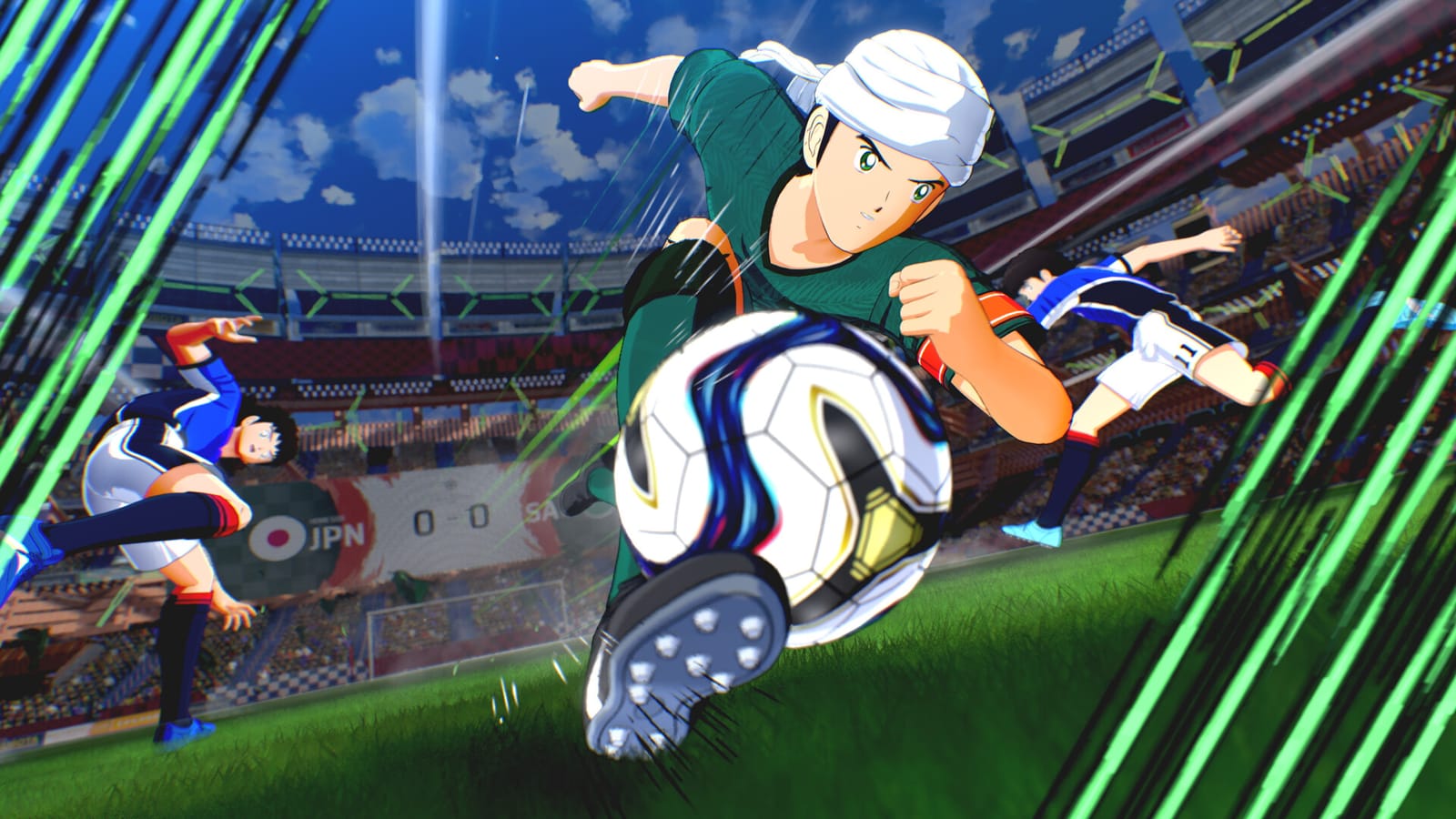
Club teams
Five of the six clubs are Brazilian; Stuttgart Youth is the German exception, fielding South Korea’s Lee Yong-un and Cameroon’s Raymond Chandler. The senior São Paulo side lists a single player, Tsubasa himself.
São Paulo
サンパウロ
- Tsubasa Ozora · MF
São Paulo Youth
サンパウロユース
- LucasCommunity spelling
- Pepe · FW
La Boca Youth
ラボカユース
- Alan Pascal
- Juan Diaz · MF
Porto Alegre Youth
ポルト・アレグレユース
- Casa GrandeCommunity spelling
- Salinas · GK
- Victor · MF
Rio de Janeiro
リオ
- Carlos Santana · FW
- Luciano Leo · MF
Stuttgart Youth
シュトゥットガルトユース
- Lee Yong-un · FW
- Raymond Chandler · FW
High-school teams
The five Japanese schools replace the middle schools of the previous game. Nankatsu High is the deepest at twelve named players; Toho Academy has Hyuga, Wakashimazu, Sorimachi and Sawada.
Nankatsu High
南葛高校
- Hajime Taki
- Hanji UrabeCommunity spelling
- Koji NishioCommunity spelling
- Mamoru Izawa
- Masao NakayamaCommunity spelling
- Ryo Ishizaki
- Shingo Takasugi
- Shun Nitta · FW
- Takeshi KishidaCommunity spelling
- Taro Misaki · MF
- Teppei KisugiCommunity spelling
- Yuzo Morisaki · GK
Kunimi Institute
国見学院
- Hiroshi Jito · DF
- Isamu IchijoCommunity spelling
- Mitsuru Sano · FW
Akita Commercial
秋田商工
- Kazuo Tachibana
- Keizinho · GK/DF
- Masao Tachibana
Narugahama Academy
成ヶ浜学院
- Kenta SasakiCommunity spelling
- Ryoma Hino · FW
Toho Academy
東邦学園
- Kazuki Sorimachi · FW
- Ken Wakashimazu · GK
- Kojiro Hyuga · FW
- Takeshi Sawada · MF
Real Japan 7
Bandai Namco describes it as “a special team called Real Japan which appeared in the original Captain Tsubasa manga”. It fields Ryoma Hino and Hanji Urabe alongside five players who appear nowhere else in the game, all marked as new on the official site.
Real Japan 7
リアル・ジャパン・7
- Hanji UrabeCommunity spelling
- Koji YoshikawaCommunity spelling
- Michel YamadaCommunity spelling
- Nobuyuki YumikuraCommunity spelling
- Ryoma Hino · FW
- Toshiya OkanoCommunity spelling
- Yuji SakakiCommunity spelling
Which teams you can pick at the start
Not all 34. Bandai Namco’s own wording for the German, French and Argentine Junior Youth kits in the Ultimate set is “unlocked through story progression”, and the same is true of the national teams they belong to: the world’s sides open up as Tsubasa’s story reaches them. The unlock guide covers what is available from the first menu and what the story hands you.
Team FAQ
Is Thailand in Captain Tsubasa 2?
Yes. Thailand is one of Tsubasa’s Asian qualifying opponents, captained by the former Muay Thai fighter Singprasert Bunnaak and built around the three Konsawatt brothers up front.
Can I build my own team from players across nations?
Not in the game: you can create one custom player and put them into an existing team, but there is no cross-team squad builder, online or offline. Our team builder does it outside the game, and the verdict page explains why the missing mode is the launch-week argument.
How many teams did Rise of New Champions have?
Eleven national teams on its official site: Japan plus Germany, USA, Senegal, the Netherlands, France, Argentina, England, Italy, Uruguay and Brazil. All eleven return here, and the sequel doubles the count.
Which team is the Real Japan 7?
A special team from the original manga. Every one of its seven entries carries Bandai Namco’s “New” badge on the official site, and five of its members appear for no other team.
Sources
- OfficialOfficial Japanese site — character index grouped into national, club, high-school and other teams
- OfficialBandai Namco Europe — English character bios naming each team's captain
- OfficialBandai Namco Europe — the story's Asian qualifying and World Youth opponents (13 May 2026)
- OfficialBandai Namco America — launch announcement naming the clubs, high schools and Real Japan
- OfficialRise of New Champions official site — the previous game's national teams, for the returning/new comparison
